


Body Frame & Structure Engineering
Structural body frame planning for bus, minibus and commercial passenger vehicle projects.
TLG SYSTEMS supports vehicle body structure development with a practical engineering approach focused on chassis interface, side frame layout, roof structure, floor structure, luggage compartment areas, door apertures and production feasibility.
From vehicle profile to production-ready structural concept.
Body frame engineering is not only a visual exterior study. The structure must follow the vehicle profile, seating layout, luggage compartment requirements, door position, chassis mounting logic and production method.
Our approach focuses on creating a realistic body frame concept that can be manufactured, assembled and adapted to project-specific vehicle requirements without unnecessary complexity.
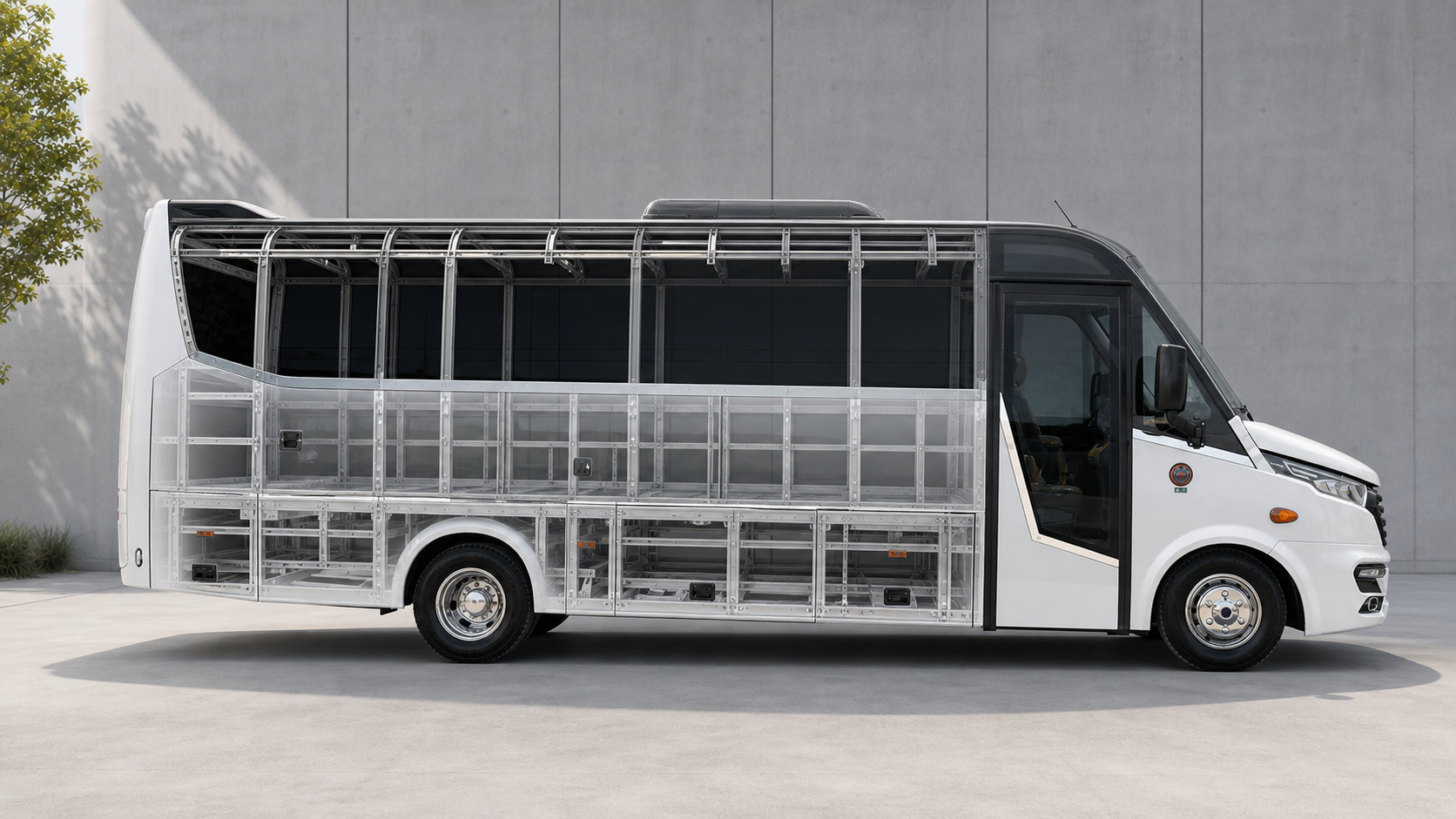
Structural areas are evaluated as one complete vehicle system.
The body frame must support vehicle packaging, passenger access, luggage space, production process and compliance targets at the same time.
Side Frame Structure
Side wall geometry, vertical posts, window belt line, panel zones and luggage compartment openings are planned together.
Roof & Bow Layout
Roof bows, upper side rails, air conditioning area, roof equipment zones and ceiling package requirements are considered.
Floor Structure
Floor crossmembers, step areas, passenger aisle, seat mounting zones and chassis interface points are reviewed.
Door Aperture Reinforcement
Front, middle or rear door openings are evaluated with the required frame reinforcement and mechanism clearance.
Luggage Compartment Areas
Side luggage doors, underfloor storage spaces, service covers and structural clearances are integrated into the frame logic.
Chassis Interface
Body mounting points, chassis restrictions, wheel arch areas, fuel tank zones and underbody package limits are considered.
Production Feasibility
The structure is planned with manufacturability, welded assembly sequence, tolerance control and fixture logic in mind.
Project-Specific Adaptation
Each vehicle project can be adapted according to wheelbase, GVW, passenger capacity, door layout and market requirements.
The frame must follow the real vehicle profile and functional zones.
A practical body structure study should not ignore exterior panels, luggage compartments, wheel arches, door positions or passenger entry geometry.
Complete Vehicle Reference
Exterior vehicle profile, side panel layout, window belt line, door location and luggage compartment zones are used as the basis for structural planning.
Body Frame Reference
The frame concept is evaluated according to real vehicle geometry, side structure, lower luggage areas, roof structure and chassis interface requirements.
Body frame engineering support for realistic vehicle projects.
The purpose is to create a structure that supports vehicle function, production feasibility and project-specific technical targets.
Structural Layout
- Side frame and roof frame concept
- Floor structure and step area planning
- Wheel arch and lower body structure
- Front and rear body transition zones
- Door aperture and entrance reinforcement
Vehicle Integration
- Chassis mounting and interface areas
- Luggage compartment and service door zones
- Seat mounting and passenger layout coordination
- Door system and mechanism clearance review
- Roof equipment and HVAC package consideration
Production Readiness
- Manufacturable frame concept
- Welded assembly sequence consideration
- Bracket and reinforcement planning
- Fixture and tolerance logic support
- Technical drawing package preparation support
From chassis data to body frame concept.
The body structure workflow starts with real chassis and vehicle requirements, then moves toward a practical structural concept.
Requirement Review
Vehicle type, target length, seating capacity, door layout, market requirements and technical targets are reviewed.
Chassis Interface
Wheelbase, axle limits, chassis height, mounting zones and underbody restrictions are checked.
Frame Concept
Side frame, floor, roof, door opening and lower body structure are defined around the vehicle package.
Integration Review
Luggage compartments, access doors, seating layout, door systems and service areas are coordinated.
Documentation
Technical drawings, structure references and production support documents can be prepared according to project scope.
Possible engineering outputs for body frame projects.
The final delivery scope can be defined according to the project phase, available chassis data and customer requirements.
| Engineering Area | Typical Output | Project Benefit |
|---|---|---|
| Body Frame Concept | Side frame, roof frame, floor structure and lower body structural concept | Creates a realistic base for vehicle body development and production planning |
| Chassis Interface | Review of mounting points, wheelbase, axle zones and underbody package limitations | Reduces integration risk between chassis and vehicle body structure |
| Door & Entrance Structure | Door opening reinforcement, entrance area structure and mechanism clearance review | Supports reliable door system integration and passenger access geometry |
| Luggage & Service Areas | Side luggage compartment zones, access covers and service door integration areas | Protects vehicle functionality while maintaining structural continuity |
| Production Support | Frame references, bracket concepts, assembly logic and technical drawing support | Improves manufacturability, repeatability and production follow-up |
Need support for a body frame or structure project?
TLG SYSTEMS can review vehicle profile, chassis data, door layout, luggage compartment requirements and production targets to define a project-specific body frame engineering scope.