

Electronic Control Units for Electric Door Systems
TLG SYSTEMS door control units are developed for electric bus, minibus and commercial passenger vehicle door systems. The control unit manages door movement, vehicle signal integration, anti-pinch protection, emergency inputs, warning outputs and automatic closing logic according to the selected door configuration.
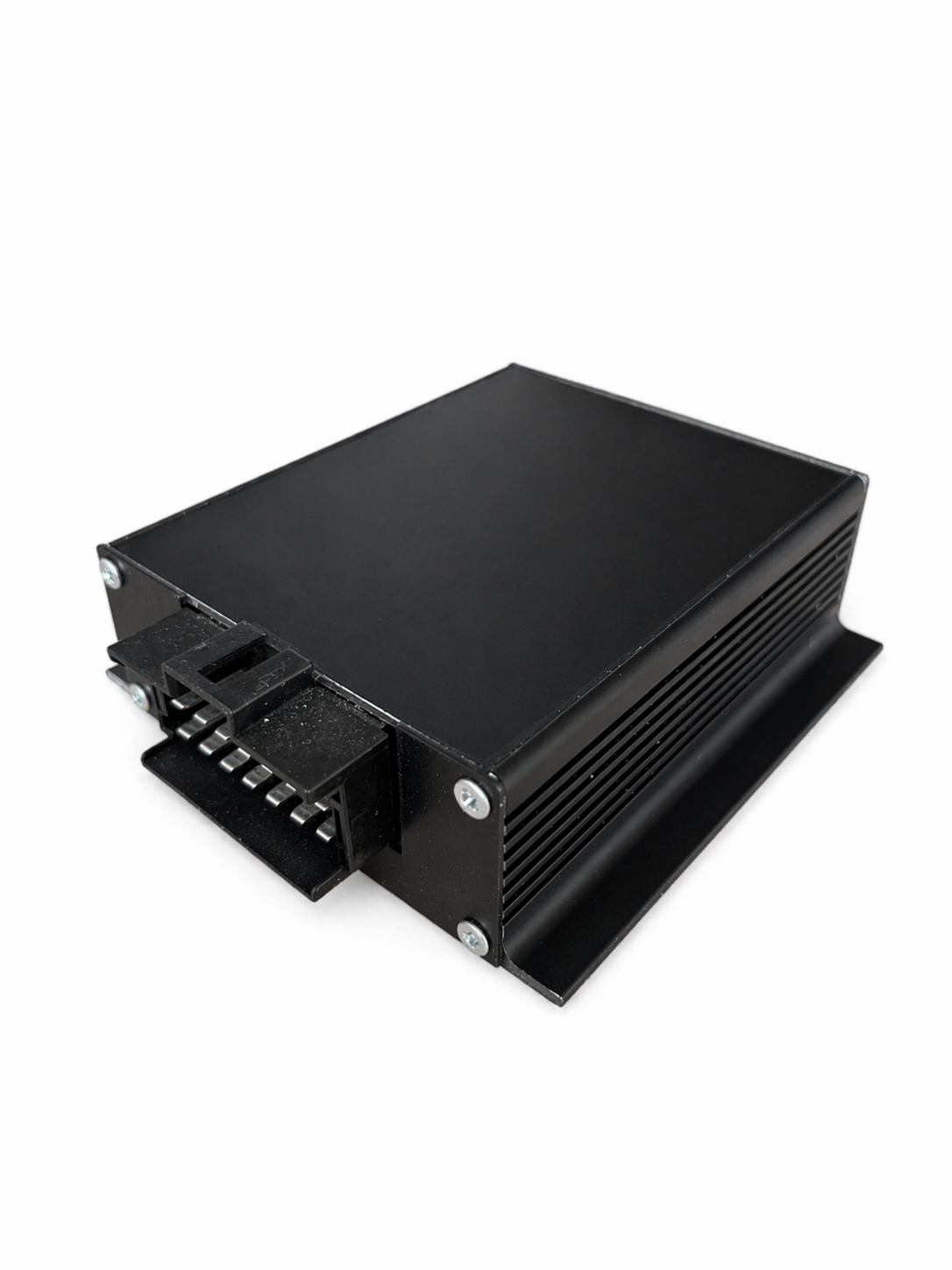
One control unit platform, configured according to door system requirements.
The control unit can be configured for single-leaf, double-leaf and sliding electric door systems. Final operating mode, input/output configuration and vehicle interface details are defined according to the door type and vehicle project.
Single-Leaf Door Control Unit
Developed for outward opening single-leaf electric door systems. It manages actuator movement, end-position behaviour, safety inputs, emergency signals and vehicle interface functions for single-leaf bus and minibus door applications.
Double-Leaf Door Control Unit
Developed for outward opening double-leaf electric door systems. It supports door movement control, safety logic, warning outputs, emergency signal input and vehicle integration functions for wider passenger entrance systems.
Sliding Door Control Unit
Developed for electric sliding door systems used in bus, minibus and special passenger vehicle projects. It manages controlled sliding movement, safety functions, end-position behaviour, emergency inputs and vehicle signal integration.
Control unit technical data.
The following data represents the standard 12/24 VDC control unit specification used for TLG SYSTEMS electric door control unit configurations.
| Weight | 0.30 kg | Current Drain at Rest | 0.03 A |
|---|---|---|---|
| Operating Temperature | −20 °C to +70 °C | Relative Humidity | 5% – 95% without condensation |
| Operating Voltage | 9 – 16 VDC (12 VDC) 17 – 30 VDC (24 VDC) |
Adjusted Sensitivity | 5 A – 20 A (12 VDC) 4 A – 10 A (24 VDC) |
| Final Tightening | 18.5 A (12 VDC) 9.1 A (24 VDC) |
Operating Mode | Single-leaf, double-leaf or sliding door configuration |
Core operating functions used across electric door systems.
The control unit is designed to provide safe, flexible and vehicle-electronics-compatible control for 12/24 VDC electric door systems.
- 1Dual sensitivity via motor consumption or external signals such as sensitive edge or microswitch.
- 2Door opening control lamp output.
- 3Automatic closing with a 3 km/h vehicle speed signal and emergency lever lock logic.
- 4Tachograph connection support.
- 5Emergency signal input.
- 6End-of-stroke braking function.
- 7Automatic closing while the vehicle is moving.
- 8Automatic closing when the parking brake is released.
- 9Automatic operation with 12/24 VDC voltages.
- 10Single-leaf, double-leaf or sliding door operating mode depending on configuration.
Vehicle integration, safety logic and door movement control in one unit.
All control unit configurations are developed around vehicle integration, passenger safety and reliable door operation. Final input/output configuration may vary depending on door type, vehicle electrical architecture, customer requirement and approval strategy.
Vehicle Integration
- 12V / 24V DC vehicle electrical system compatibility
- Vehicle signal input support
- Tachograph interface capability
- Door open warning light output
- Parking brake signal integration
- 3 km/h speed signal integration
Safety Logic
- Motor current based anti-pinch protection
- External anti-pinch signal input
- Sensitive edge compatibility depending on configuration
- Microswitch input compatibility depending on configuration
- Emergency signal input
- Emergency release handle deactivation via speed signal
Door Movement Control
- Opening and closing movement control
- End-position braking
- Automatic closing while vehicle is moving
- Automatic closing via 3 km/h speed signal
- Automatic closing when parking brake is released
- Configuration according to door type
Designed for integration with vehicle electrical architecture.
The control unit is not only a motor driver. It is part of the door system interface. It receives vehicle and safety signals, manages automatic closing logic and provides outputs required for warning and integration functions.
- Vehicle speed signal input for 3 km/h logic
- Parking brake signal input for automatic closing logic
- Emergency signal input
- Door open warning lamp output
- Tachograph connection support
- External anti-pinch input support
Configured according to single-leaf, double-leaf or sliding door operation.
The same control unit family is positioned for different door system requirements. The final control logic is selected according to the mechanism, motor, emergency release architecture and vehicle signal strategy.
Single-Leaf Mode
Suitable for outward opening single-leaf electric door mechanisms with lift-and-lock style movement, end-position behaviour, anti-pinch logic and vehicle signal integration.
Double-Leaf Mode
Suitable for outward opening double-leaf electric door systems where wider entrance operation, emergency logic, warning output and vehicle interface support are required.
Sliding Door Mode
Suitable for electric sliding door mechanisms where controlled sliding movement, end-position braking, safety input and vehicle signal logic must be configured according to the project.
Developed with vehicle electrical integration in mind.
The control unit design is developed with vehicle electrical integration, EMC requirements and interface responsibility management in mind. For OEM and Stage-2 vehicle projects, cybersecurity-related interface responsibilities can be defined project by project through the relevant vehicle integration agreement.
- Vehicle electronics compatible control approach
- Project-specific input/output definition
- Electrical interface responsibility can be defined with the vehicle integrator
- Suitable for OEM and Stage-2 vehicle project discussions
- Final validation depends on vehicle platform and system configuration
Need a door control unit for your electric door system?
Contact TLG SYSTEMS for control unit configuration, door type selection, vehicle signal interface, wiring architecture and project-specific technical support.